

News お知らせ(休診・セミナー情報など)
トランセントホワイトニングシステム導入講習会資料のご案内
【ASLMS 2026 受賞講演スライドを用いた講習資料のご案内】
Educational Materials Based on My ASLMS 2026 Award Lecture
ASLMS 2026(American Society for Laser Medicine and Surgery)のPlenary Sessionにて受賞講演の機会を賜り、その際に使用したスライドを、講習会用資料として冊子化いたしました。
ASLMS 2026(American Society for Laser Medicine and Surgery)のPlenary Sessionにて講演の機会をいただき、その際に使用したスライドを講習資料として準備いたしました。
本資料は、講習会だけでなく、患者様への臨床説明の際にも使用してまいります。
日々の臨床と、継続してご来院くださる患者様方のご協力を通じて、当院では観察に基づく臨床研究を継続しています。
トランセントニングホワイトニングシステムの指導医として、また臨床研究歯科医師として、本講習では、歯を白くする技術だけでなく、その効果を安全かつ効率的に引き出すために必要な照射管理、観察視点、リスク管理についてお伝えいたします。
機器特性を理解することは、効果を適切に引き出すうえでも、安全管理を行ううえでも重要な基盤となります。
また、患者様ごとの状態や反応に応じて、効果と安全性の両立を図る視点が求められます。
光、冷却、照射条件によって、口腔組織にどのような反応が生じるのか。
どのような範囲を安全に管理しながら施術を行うべきか。
そして、どのような観察と判断が必要となるのか。
臨床現場で実際に観察された、歯、歯肉、舌、感覚応答を含む多面的な変化をもとに、生体反応をどのように読み取るかを共有いたします。
本技術では、患者様ごとの状態や反応を一律化せず、生体反応を観察しながら照射管理を行うことを重視しています。
こうした視点は、今回のASLMSにおいても、診療科を越えて議論される重要なテーマでした。
術後にみられる一時的な色調変化、術前には目立ちにくかった白斑の浮き立ち、歯肉や舌の見え方の変化なども、その背景を理解することで、経過を観察すべき生体反応として捉えやすくなります。
この理解は、結婚式等の大切なご予定を控えた患者様に対し、術後反応の可能性を事前に説明し、適切なタイミングや副反応に配慮した施術計画を立てるうえでも重要です。
講習では、これらの照射管理、リスク管理、観察視点を含めてお伝えいたします。
患者様ごとの反応を見極めながら、ご自身の臨床に取り入れていきたい先生方にご参加いただけましたら幸いです。
本講習をご希望の先生方は、ホームページのお問い合わせフォームよりご連絡ください。
なお、導入前講習会においても、本資料を使用し、進呈させて頂きます。
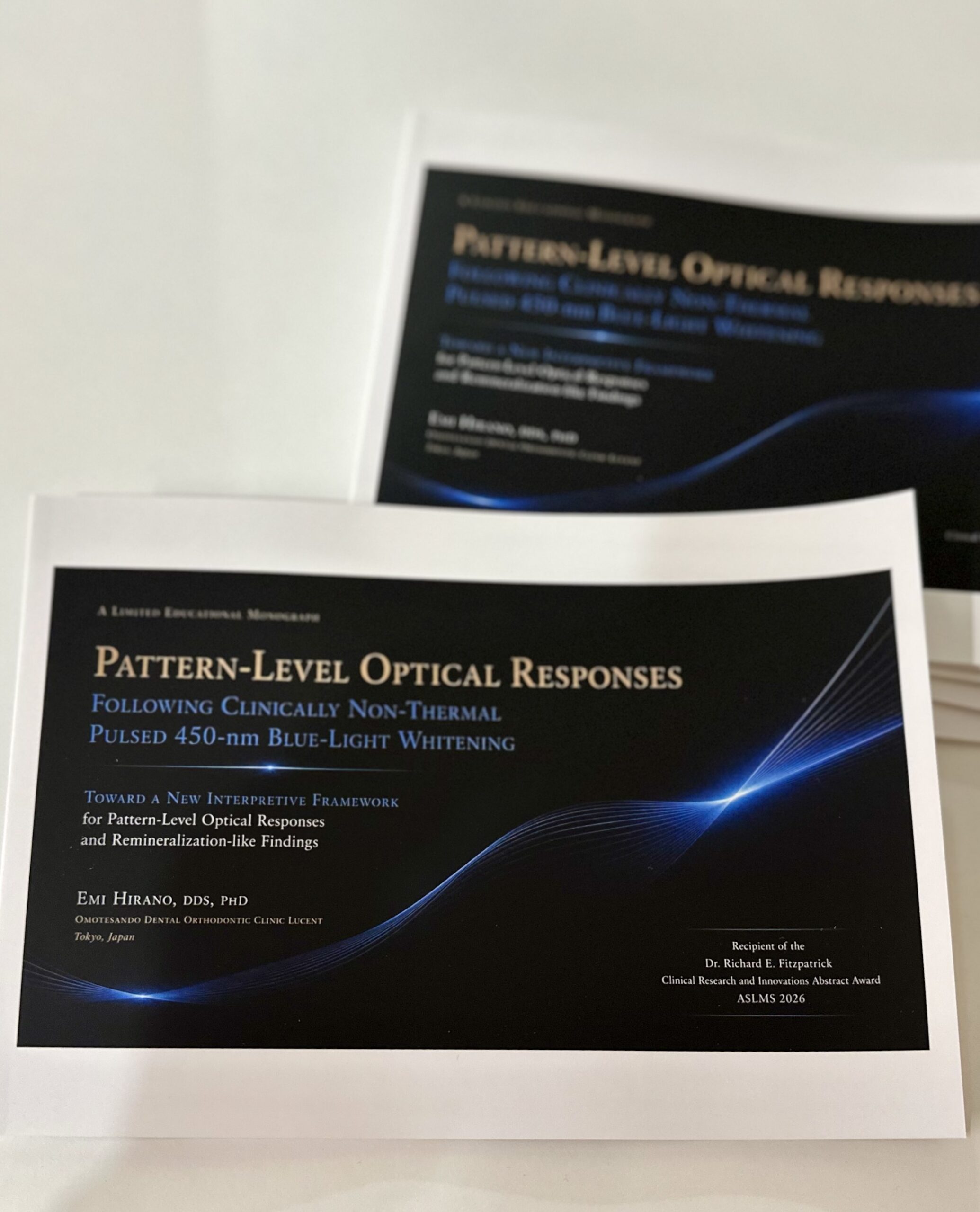
The slides used for my award lecture at the Plenary Session of ASLMS 2026 (American Society for Laser Medicine and Surgery) have been compiled into a booklet for use in our training courses.
These materials are also used to help explain clinical observations and treatment responses to patients.
Through daily clinical practice and the continued cooperation of my patients, I have pursued observation-based clinical research, carefully documenting and evaluating biological responses observed during treatment.
This course is designed not only to teach whitening techniques, but also to share the principles of irradiation management, clinical observation, and risk management that are necessary to achieve effective outcomes while maintaining patient safety.
Understanding device characteristics provides an important foundation for both optimizing clinical effects and ensuring appropriate safety management.
In addition, clinicians must consider each patient's individual condition and response in order to balance efficacy and safety.
How do oral tissues respond to differences in light delivery, cooling, and irradiation parameters?
What range of responses should be managed safely, and what types of observation and clinical judgment are required?
Based on multidimensional clinical observations involving teeth, gingiva, tongue findings, and sensory responses, this course explores how biological reactions may be interpreted in everyday clinical practice.
This treatment philosophy emphasizes observing biological responses and adjusting irradiation management accordingly, rather than assuming identical responses among all patients.
Notably, similar concepts were discussed across multiple medical specialties at ASLMS 2026, highlighting the growing importance of response-based treatment strategies beyond individual disciplines.
Temporary color changes following treatment, increased visibility of pre-existing white spot lesions, and changes in the appearance of gingival or tongue tissues may all be easier to interpret when their biological background is understood.
Such understanding is particularly important when planning treatment for patients who are preparing for important life events, such as weddings, where timing, expected responses, and potential adverse effects should be carefully considered in advance.
Accordingly, this course includes discussion of irradiation management, risk management, and clinical observation strategies that may assist clinicians in interpreting patient responses and planning treatment appropriately.
We welcome clinicians who wish to incorporate these perspectives into their own practice while carefully evaluating individual patient responses.
Those interested in attending future courses are encouraged to contact us through the inquiry form on our website.
These educational materials will also be used during our pre-installation training programs.
Emi Hirano, DDS, PhD
Director
Omotesando Dental Orthodontic Clinic LUCENT
Educational Materials Based on My ASLMS 2026 Award Lecture
ASLMS 2026(American Society for Laser Medicine and Surgery)のPlenary Sessionにて受賞講演の機会を賜り、その際に使用したスライドを、講習会用資料として冊子化いたしました。
ASLMS 2026(American Society for Laser Medicine and Surgery)のPlenary Sessionにて講演の機会をいただき、その際に使用したスライドを講習資料として準備いたしました。
本資料は、講習会だけでなく、患者様への臨床説明の際にも使用してまいります。
日々の臨床と、継続してご来院くださる患者様方のご協力を通じて、当院では観察に基づく臨床研究を継続しています。
トランセントニングホワイトニングシステムの指導医として、また臨床研究歯科医師として、本講習では、歯を白くする技術だけでなく、その効果を安全かつ効率的に引き出すために必要な照射管理、観察視点、リスク管理についてお伝えいたします。
機器特性を理解することは、効果を適切に引き出すうえでも、安全管理を行ううえでも重要な基盤となります。
また、患者様ごとの状態や反応に応じて、効果と安全性の両立を図る視点が求められます。
光、冷却、照射条件によって、口腔組織にどのような反応が生じるのか。
どのような範囲を安全に管理しながら施術を行うべきか。
そして、どのような観察と判断が必要となるのか。
臨床現場で実際に観察された、歯、歯肉、舌、感覚応答を含む多面的な変化をもとに、生体反応をどのように読み取るかを共有いたします。
本技術では、患者様ごとの状態や反応を一律化せず、生体反応を観察しながら照射管理を行うことを重視しています。
こうした視点は、今回のASLMSにおいても、診療科を越えて議論される重要なテーマでした。
術後にみられる一時的な色調変化、術前には目立ちにくかった白斑の浮き立ち、歯肉や舌の見え方の変化なども、その背景を理解することで、経過を観察すべき生体反応として捉えやすくなります。
この理解は、結婚式等の大切なご予定を控えた患者様に対し、術後反応の可能性を事前に説明し、適切なタイミングや副反応に配慮した施術計画を立てるうえでも重要です。
講習では、これらの照射管理、リスク管理、観察視点を含めてお伝えいたします。
患者様ごとの反応を見極めながら、ご自身の臨床に取り入れていきたい先生方にご参加いただけましたら幸いです。
本講習をご希望の先生方は、ホームページのお問い合わせフォームよりご連絡ください。
なお、導入前講習会においても、本資料を使用し、進呈させて頂きます。
The slides used for my award lecture at the Plenary Session of ASLMS 2026 (American Society for Laser Medicine and Surgery) have been compiled into a booklet for use in our training courses.
These materials are also used to help explain clinical observations and treatment responses to patients.
Through daily clinical practice and the continued cooperation of my patients, I have pursued observation-based clinical research, carefully documenting and evaluating biological responses observed during treatment.
This course is designed not only to teach whitening techniques, but also to share the principles of irradiation management, clinical observation, and risk management that are necessary to achieve effective outcomes while maintaining patient safety.
Understanding device characteristics provides an important foundation for both optimizing clinical effects and ensuring appropriate safety management.
In addition, clinicians must consider each patient's individual condition and response in order to balance efficacy and safety.
How do oral tissues respond to differences in light delivery, cooling, and irradiation parameters?
What range of responses should be managed safely, and what types of observation and clinical judgment are required?
Based on multidimensional clinical observations involving teeth, gingiva, tongue findings, and sensory responses, this course explores how biological reactions may be interpreted in everyday clinical practice.
This treatment philosophy emphasizes observing biological responses and adjusting irradiation management accordingly, rather than assuming identical responses among all patients.
Notably, similar concepts were discussed across multiple medical specialties at ASLMS 2026, highlighting the growing importance of response-based treatment strategies beyond individual disciplines.
Temporary color changes following treatment, increased visibility of pre-existing white spot lesions, and changes in the appearance of gingival or tongue tissues may all be easier to interpret when their biological background is understood.
Such understanding is particularly important when planning treatment for patients who are preparing for important life events, such as weddings, where timing, expected responses, and potential adverse effects should be carefully considered in advance.
Accordingly, this course includes discussion of irradiation management, risk management, and clinical observation strategies that may assist clinicians in interpreting patient responses and planning treatment appropriately.
We welcome clinicians who wish to incorporate these perspectives into their own practice while carefully evaluating individual patient responses.
Those interested in attending future courses are encouraged to contact us through the inquiry form on our website.
These educational materials will also be used during our pre-installation training programs.
Emi Hirano, DDS, PhD
Director
Omotesando Dental Orthodontic Clinic LUCENT